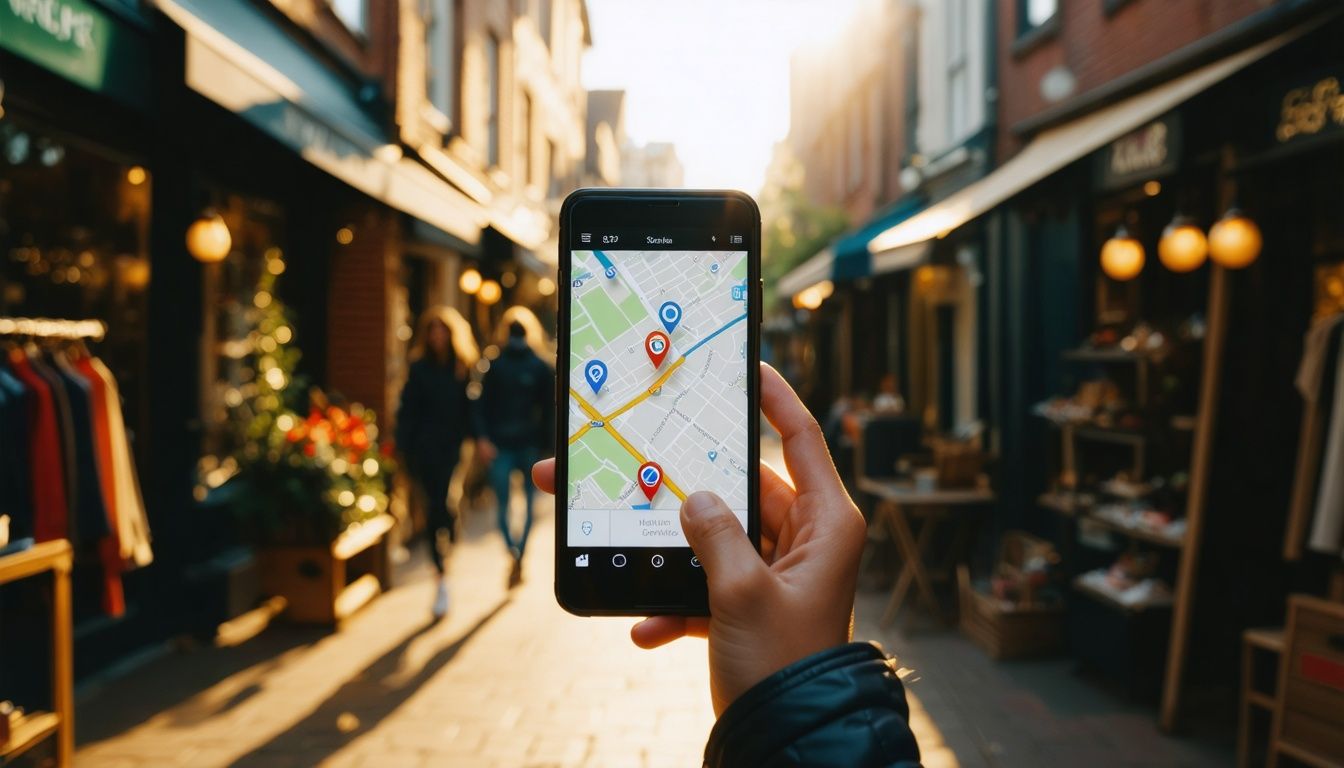
When someone nearby searches “plumber near me” or “best dentist,” Google shows three businesses on a map above the regular results. That box decides who gets the call. Learning how to rank higher on Google Maps is the highest-leverage move a local business can make, and it comes down to seven signals you can act on this week. Below: the local 3-pack, the three ranking pillars Google uses, and the practical steps that move you up the list.
What the local 3-pack is and why it matters
The local 3-pack is the boxed map result Google places at the top of local searches. Three businesses appear with stars, reviews, distance, and a Call or Directions button. Most local searches happen on mobile, where the 3-pack fills the screen before any organic blue link.
If you rank fourth or below, you sit on the “Local Finder”, the longer list users see after tapping More places. The drop-off between 3-pack and Local Finder is steep. Position 4 might as well be page 2.
The 3-pack matters for three reasons:
- Intent: people searching “near me” want to buy or visit, not browse
- Trust: Google’s map placement carries authority a paid ad doesn’t
- Action: the buttons let users call or drive to you in one tap
Ranking in the 3-pack is the difference between a steady stream of leads and a quiet phone.
The three pillars: relevance, distance, prominence
Google’s published guidance names three factors that drive local rankings: relevance, distance, and prominence.
Relevance measures how well your Google Business Profile matches what the searcher typed. A dentist listing won’t surface for “orthodontist” unless your profile says so. Categories, services, and the business description carry this signal.
Distance is geography. Google calculates how far your verified address sits from the searcher’s location (or from the area named in the query). You can’t move your office, but you can rank in nearby cities by appearing in their citation directories and earning reviews from customers there.
Prominence is the hardest pillar. Google looks at how known your business is: review volume, review velocity, backlinks from local sites, mentions in news, citation consistency, and the strength of your website’s organic SEO. A 20-year-old shop with 400 reviews beats a six-month-old competitor on prominence alone.
Start with the foundation, your Google Business Profile, then layer reviews, citations, and links on top.
Optimize your GBP listing (the foundation)
Your Google Business Profile is the listing Google ranks. Everything else feeds into it.
The work splits into three parts:
- Categories: pick the most specific primary category Google offers (e.g.
Pediatric dentist, notDentist). Add every relevant secondary category. The primary category carries the most weight for relevance. - Services and products: list every service with a short description. Use the language customers use, not internal jargon. If you offer “crown lengthening,” write that, but also write “gum surgery” as a separate service if customers search that way.
- Business description: 750 characters, written for humans first. Include your primary keyword once, name your service area, and lead with what makes you different.
Add Photos, Posts, Q&A, and a populated Products section. Profiles with 100+ photos rank higher and convert better. Post weekly; Google rewards active listings. Answer questions yourself before customers post wrong information.
The full checklist with field-by-field guidance lives in our Google Business Profile Optimization Checklist. Walk through it once and your relevance score will move within weeks.
Get reviews that mention your services and locations
Reviews drive prominence and relevance at the same time. Google reads review text, not just star ratings. A review that says “Best teeth cleaning in Dublin” tells Google you’re relevant for both teeth cleaning and Dublin, a signal no amount of website copy can replicate.
Three rules govern review strategy:
- Volume beats velocity, but velocity beats stagnation. A profile gaining 10 reviews a month outranks one stuck at 200 from three years ago. Aim for steady inflow.
- Ask at the moment of value. The best time to request a review is right after the customer says “thank you.” Send a text with a direct GBP link. Don’t make them search.
- Respond to every review, good or bad. Owner responses tell Google the listing is monitored and signal trust to anyone reading. Use service keywords in your replies.
Never buy reviews, never offer discounts in exchange for them, and never write fake ones. Google removes fake reviews and penalizes accounts that post them. The goal is a real, growing record of customer language describing your services.
If review-gathering feels like a part-time job, our local growth services automate the request and follow-up flow.
Build local citations: consistent NAP across the web
Citations are mentions of your business NAP (name, address, and phone number) on directory sites, industry listings, and local pages. Yelp, Yellow Pages, Foursquare, BBB, chamber of commerce sites, and trade-specific directories all count.
Two things matter here:
- Coverage: be listed in the directories your competitors appear in. Tools like BrightLocal or Whitespark show citation gaps for any postcode.
- Consistency: your name, address, and phone number must match across every site.
123 Main Ston one site and123 Main Streeton another creates two entities in Google’s index, splitting your prominence signal.
Pick one canonical format and audit every existing listing against it. Fix the discrepancies, even punctuation differences. If you’ve moved offices in the last five years, old citations with the previous address are hurting you.
The high-value directories are general (Yelp, Apple Maps, Bing Places), industry-specific (Avvo for lawyers, Healthgrades for doctors), and local (chamber of commerce, BID websites, regional business associations). Twenty good citations beat 200 spammy ones.
Not sure where you rank today? Run a free local audit.
Earn local backlinks from your community
Backlinks from local sites are the strongest prominence signal Google uses outside reviews. A link from your city’s tourism board, a local newspaper, or a regional blog tells Google you’re rooted in the area, which is what local search rewards.
Where to earn them:
- Sponsorships: sponsor a youth team, charity 5K, or local festival. Most include a logo and link on their site.
- Local press: pitch story angles to neighborhood papers. A new service, a community event you’re hosting, or a customer milestone is enough.
- Partnerships: trade links with non-competing local businesses. A dentist and an orthodontist refer patients; their websites should link too.
- Local guides and round-ups: pitch yourself for “best of [city]” lists on regional blogs and lifestyle sites.
- Events: host or co-host an event. Event listings on local sites create natural, relevant links.
Avoid generic link-building services and paid link networks. Google catches them and penalizes the listing. Every link should come from a real local entity that would mention you whether SEO existed or not.
For businesses that want this handled end-to-end, FoundFirst’s market leader plan builds local authority across citations, reviews, links, and content under one workflow.
How long it takes to see results
Local SEO is slower than paid ads and faster than organic search. A reasonable expectation:
- Weeks 1-4: GBP optimization and review velocity start moving the listing. You’ll see profile views, search appearances, and direction requests rise in the GBP
Insightstab. - Months 2-3: citation cleanup and new listings index. Distance signals firm up. You move from page 2 of the Local Finder toward page 1.
- Months 3-6: backlink work compounds. Prominence grows. The 3-pack becomes reachable for primary keywords in your immediate area.
- Months 6-12: rankings stabilize across a wider service area. Long-tail and “near me” queries from neighboring cities start converting.
These windows assume consistent work. Stopping reviews, posts, or citation maintenance after month 3 unwinds the gains. Local rankings reflect ongoing activity.
The businesses that win the 3-pack treat it like a habit: review requests every week, GBP posts every Monday, citation audits every quarter. Pick the seven actions in this guide, schedule them, and consistency does the rest.